
I recently took down the walls on our family trampoline.
Its used to look like this, nice and safe…
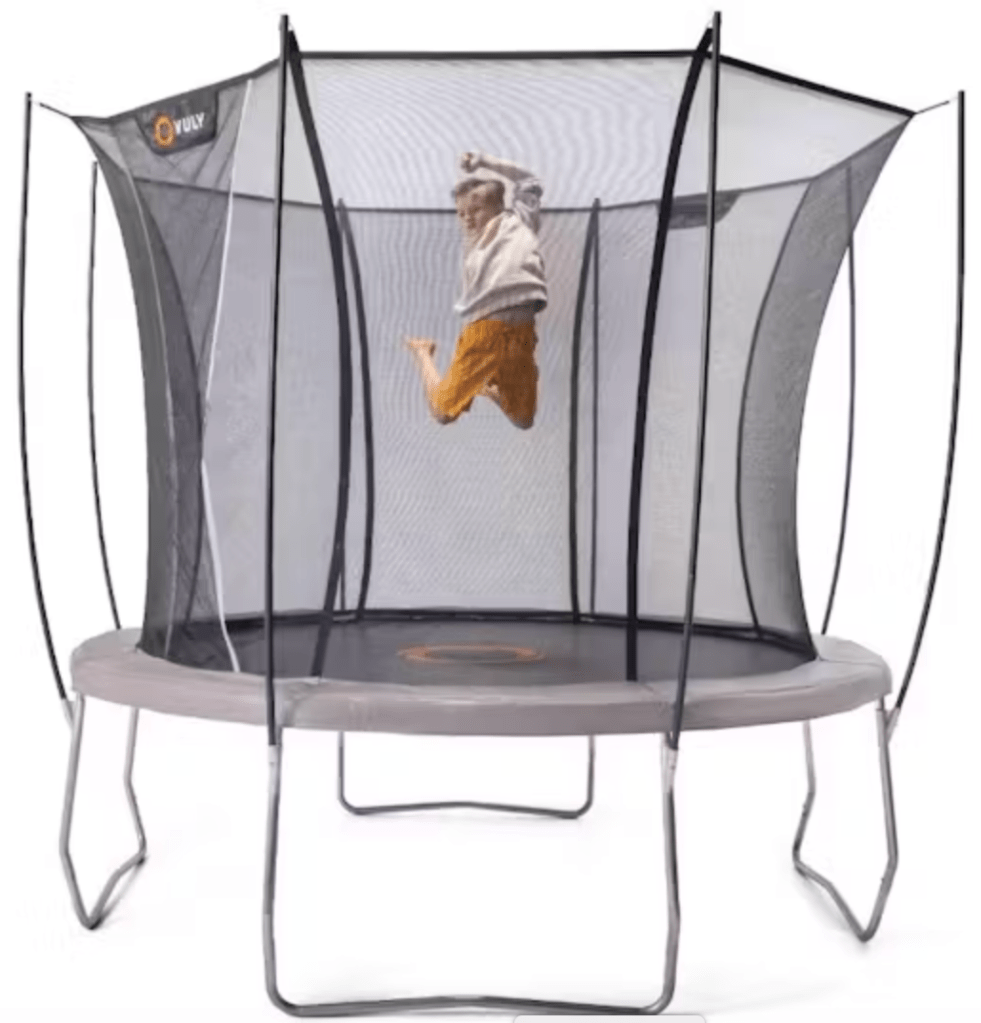
We had the whole setup: walls, padding, roof to keep the leaves and harmful UV rays out. Somewhere along the way I bolted a netball hoop to the outside.
Recently though, everything except the trampoline and the post with the netball hoop came down.
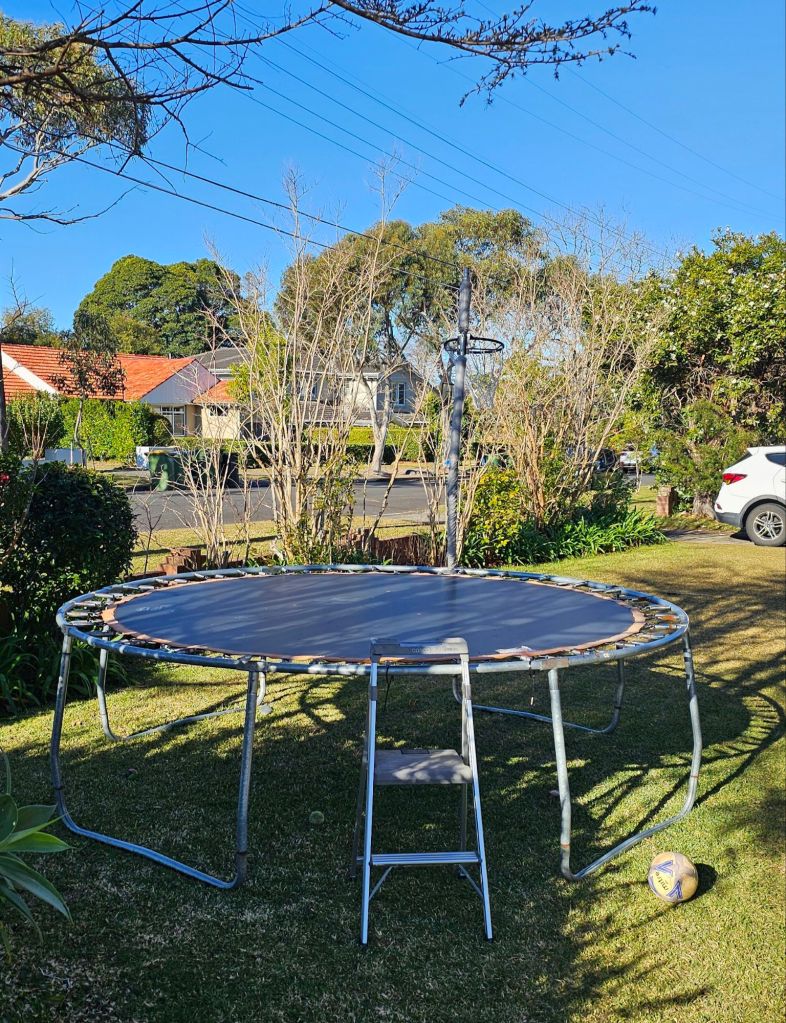
Honestly, I was a bit unsure about how this was going to go. Santa delivered this to us about 6 Christmases ago. 6 year of bouncing against the side walls, doing handstands up against it. Not only were the kids going to have to learn how to bounce safely together they were going to have to ‘unlearn’ that they can no long just slam into the sides and bounce off, one of their favourite things to do.
We have three kids aged 11, 8 and 4 and over the past few weeks of this experiment I have, once again, been amazed at how fast kids can adapt. Instantly their bouncing style and game play has changed. Not only did they instantly reset their play to accomodate the increased risk factor but they are now reinventing new ways to play and creating new games based on the new environment.
Considering how worried I was about getting us safely through the adjustment period, it was amazing to see that there virtually wasn’t one at all.
I called it an experiment but in reality the protective sides had degenerated in our harsh Australian sunlight and they had developed large holes. It was getting to the stage where they kids would go to bounce off the walls only for the walls to give way, or for them to go through a hole and end up on the ground. They were now only providing the illusion of safety, which to me is worse than not having the walls, so down they came.
We’re about a month in so far and I don’t know how it will end up, we’ve had one minor fall when the 4yr old half missed the ladder while rushing to get off during a game of tip/tag. So there are some lessons and some adjustments, but some amazing new games and revitalised outdoor playing, as well as some amazing self regulation and assessment. No longer are they crashing about mindlessly, knowing they are in an environment where even a bump on the elbow is unlikely. Now they are still playing with full vigour but the are also now being mindful of their environment and the type of play they can do.
There is a lot of advice out there about the benefit in risky play and creating self regulating learning. Which, while both are very relevant, they are not my main takeaway.
So why am I sharing this?
This experiment has reinforced for me just how critical the environment is. It matters significantly and focusing on developing a specific environment will deliver specific results. The right environment can also deliver significant results faster than instructional learning.
Sometimes it is our own fear, biases or conditioning that causes us to inadvertently limit the environment and hold back our child’s, or our athletes, development.
An environment can promote a growth mindset, or not.
It can be a place of belonging, or not.
It can be a place of compassion and understanding, or not.
It can be a place where mistakes are derided, or a place where mistakes are recognised as the growth opportunities they are.
We can create environments where the athlete feels cared for and valued as a person, not just a player.
It can be a place where self moderation and self determination are developed, where they are able to grow. Or we can stifle them, putting constraints on them, leaving these attributes shrivelled and underdeveloped.
Constant reflection on the environment, as well as tinkering and adjusting, is something we all need to devote some time to, even if it is just the car ride home. A moment to quietly consider the environment we are creating is something every coach and parent needs to undertake.
And not just reflection on the environment but also reflection on ourselves and asking the question: Are we sure that our biases and fears aren’t holding them back? What might we discover if we took down the walls?
 Lifelong Sport
Leave a comment